Do You Need PR to Work as a Nurse in Canada?
IMMIGRATION
4/11/2026
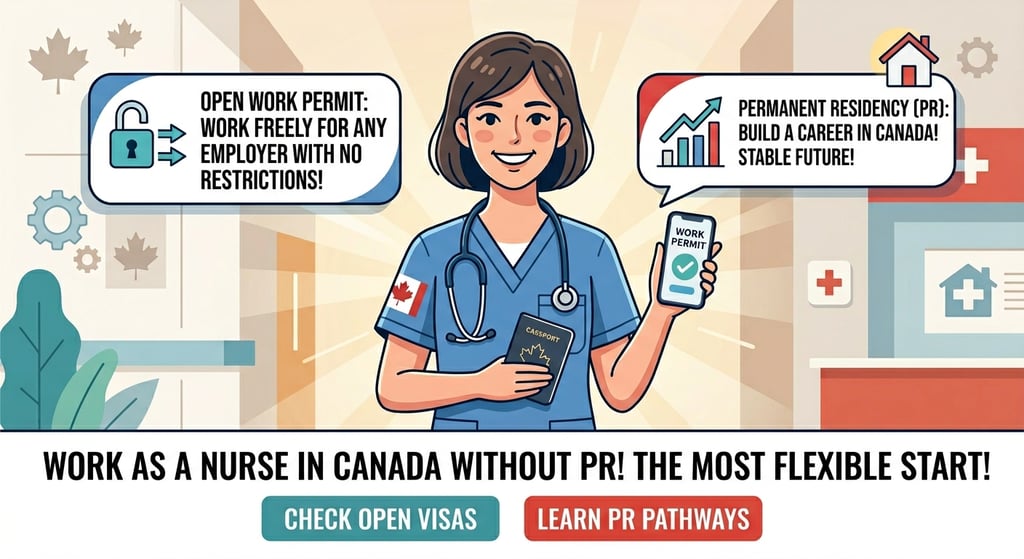
Do You Need PR to Work as a Nurse in Canada?
What international nurses should know before making the move
One of the most common questions international nurses ask is surprisingly simple: do I need Permanent Residency to work here? The short answer is no. But the real answer is what actually matters.
You don't need PR — but you do need the right status
Legally, you can work as a nurse in Canada without PR. What you need is authorization to work. There are several ways to get it, and which one applies to you depends on where you're coming from and how you're entering the system.
Post-Graduation Work Permit (PGWP) If you studied nursing at a Canadian institution, you're eligible for an open work permit after graduation. This lets you work for any employer in any role — one of the most flexible ways to start your nursing career in Canada.
CUSMA / USMCA work permit Nurses who are US or Mexican citizens can access a streamlined, LMIA-exempt permit — typically approved at the border, valid up to 3 years and renewable. Note: this applies to citizens only, not permanent residents of those countries. You still need to meet provincial licensing requirements before you can actually practise as a nurse.
Atlantic Immigration Program (AIP) If you have a job offer in Nova Scotia, New Brunswick, Newfoundland & Labrador, or PEI, this employer-driven federal program can take you from temporary work to permanent residency more directly. Major health systems like Nova Scotia Health are designated AIP employers.
Spousal open work permit If your spouse or partner holds a valid Canadian work or study permit, you may qualify for an open work permit through them — with the same job flexibility as a PGWP holder.
What people often get wrong
Most people focus on whether PR is required. But in practice, a different question shapes your daily work life:
Not "do I need PR?" — but "do I have an open or closed work permit?"
Because that determines whether you can change jobs easily, how employers see your application, and how stable your situation actually is.
On a closed permit, switching employers isn't straightforward — you'd need a new permit each time. On an open permit like a PGWP or spousal permit, you can move freely between employers. PR removes the question entirely.
In Ontario especially, most hospitals and LTC facilities don't sponsor work permits at all. They hire nurses who already have open permits or PR. So arriving without one of those already in hand significantly narrows your options from day one.
Why PR still matters more than people think
Even though PR isn't required to start, it changes almost everything about your career stability.
Most hospitals and LTC facilities prefer — and often effectively require — candidates who already have PR or an open permit. Not because of a written rule, but because hiring someone whose status expires in a year creates real administrative and retention headaches on their end. You're not disqualified, but you're starting at a disadvantage.
Working without a stable status also means your job is tied to your immigration timeline. If your permit renewal hits a delay, your legal ability to work pauses with it. That mental overhead is bigger than most people expect before they arrive.
Pathways from temporary work to PR
The good news: Canada is actively prioritizing nurses for permanent residency. Here are the main routes.
Express Entry Registered nurses (NOC 31301) are eligible for occupation-specific draws. Since 2023, IRCC has been running healthcare-targeted draws that invite nurses at lower CRS scores than general rounds. You don't need a job offer to apply — at least six months of continuous nursing experience in the past three years, in Canada or abroad, can qualify you depending on the program (FSW, CEC, etc.).
One important thing: you don't need a Canadian nursing license to enter the Express Entry pool. But you will need provincial registration to actually practise. Start the credential assessment process through NNAS early — it runs parallel to immigration, not after it.
Provincial Nominee Programs (PNPs) BC, Saskatchewan, Nova Scotia, and Ontario all run streams specifically for nurses. A provincial nomination can add 500–600 CRS points, which significantly increases your chances of receiving an Express Entry invitation.
Atlantic Immigration Program (AIP) One of the more direct employer-supported routes to PR, particularly for nurses working in Atlantic Canada. Requires a designated employer — major regional health systems qualify.
Study → PGWP → PR A common path for those earlier in their careers: study nursing in Canada, use the open work permit to gain Canadian experience, then apply through Express Entry's Canadian Experience Class.
So — do you actually need PR?
No. You don't need PR to start working as a nurse in Canada.
But the more useful question is: what kind of work permit will you have, and what does that let you do? Because the difference between an open permit and a closed one — or between temporary status and PR — isn't just administrative. It's the difference between building a career here and managing a countdown.
A lot of people focus on whether PR is technically required. But the better question is: what kind of life are you trying to build here?
Working without PR is possible. Staying and growing without it is where things get genuinely harder.
Immigration policy changes frequently. For your specific situation, consult a Regulated Canadian Immigration Consultant (RCIC) or immigration lawyer.
Knowing your legal status is crucial, but it's only one piece of the puzzle. What's your next move?
If you need to start your licensing process: [How International Nurses Can Become Licensed in Ontario (Step-by-Step Guide)]
If you want to know the "hidden" challenges of working here: [Challenges International Nurses Face in Canada (2026): What No One Tells You]
Contact
Questions or stories? Reach out anytime.
Social media
contact@nurseincanada.com
© 2025. All rights reserved.
Will update.