NNAS Process for International Nurses in Ontario: Fees, Timeline, and Requirements (2026)
IMMIGRATION
3/14/2026
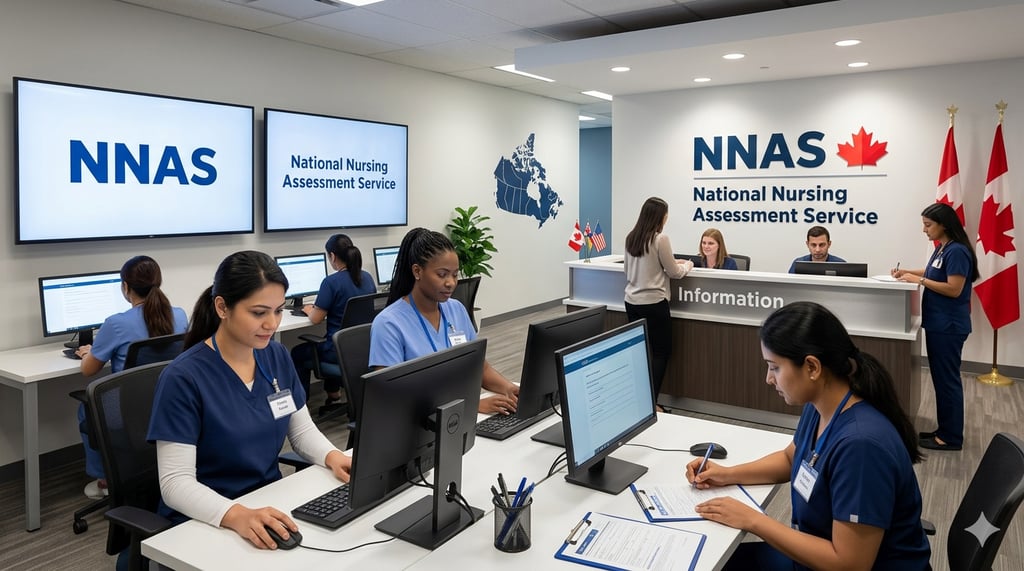

NNAS Process for International Nurses in Ontario: Fees, Timeline, and Requirements (2026)
Looking for just the fee breakdown? → NNAS Application Fee Breakdown (2026): What You Actually Have to Pay
If you read my previous post about how internationally educated nurses can become licensed in Ontario, you already know that there are two main pathways — completing a nursing program in Canada, or going through credential assessment. This post focuses on that second route: the NNAS process for international nurses in Ontario.
I will be transparent here: I personally chose to study nursing in Canada rather than go through NNAS, so this is not a firsthand account. That said, I have worked alongside nurses who went through this process. A colleague of mine — a fellow ADOC — became a Registered Nurse in Ontario through NNAS. I have also worked with nurses at various stages of the process, including those completing clinical placements as part of their bridging requirements. Based on those conversations, observations, and publicly available information, here is what the NNAS pathway actually looks like.
What Is NNAS and Why Does It Matter?
The National Nursing Assessment Service (NNAS) is a non-profit organization that evaluates the credentials of internationally educated nurses (IENs) who want to become licensed in Canada. It acts as a centralized assessment body, comparing your nursing education and experience against Canadian standards.
NNAS does not grant nursing licenses. Its job is to produce an Advisory Report — a document that summarizes your credentials — and send that report to the provincial regulatory body of your choice. In Ontario, that body is the College of Nurses of Ontario (CNO). The CNO then decides what, if anything, you need to do before you can be eligible for registration.
NNAS is the gateway, not the finish line.
NNAS Regular Service vs. Expedited Service: Which One Applies to You?
Before diving into the steps, it helps to understand that NNAS offers two service types.
Regular Service is the standard route. It involves a full, individual review of your nursing education curriculum — including a course-by-course analysis — and typically takes longer to complete.
Expedited Service is a simplified version with fewer document requirements. It allows you to begin the credentialing process for both RN and LPN designations at the same time under a single fee, and no individual curriculum assessment is required. When eligible, the Advisory Report is issued within five business days of all documents being received.
Check the NNAS website to determine which service you qualify for before starting your application — it can save you both time and money.
Step 1: Create Your NNAS Account and Pay the Application Fee
The process starts at the NNAS online portal. You create an account, provide your personal, educational, and professional information, and pay the application fee.
Current fees:
Regular Service: approximately $650 USD for the main application, covering one nursing designation and one province. Additional fees apply if you want assessments for more than one nursing designation (for example, adding an RPN evaluation costs approximately $220 USD), or if you add additional provinces.
Expedited Service: approximately $750 CAD, covering both RN and LPN designations under a single fee.
Note that fees and structures can change, so always confirm the current amounts on the NNAS website before submitting. NNAS has a no-refund policy, so make sure you understand which service applies to you before submitting payment.
Your application remains active for 12 months from the date of payment. If all required documents are not received within that window, the application expires.
Step 2: NNAS Required Documents
This is often the most time-consuming part of the entire process — and where delays are most likely to happen.
For Regular Service, you will need to arrange submission of:
Official transcripts sent directly from your nursing school
Course descriptions for all nursing courses completed
Nursing education verification form — completed by your school and sent directly to NNAS
Employment verification — for nursing positions held within the past five years
Nursing registration/licensure verification — sent directly by your licensing authority in your home country
Notarized identity documents — two forms of ID, notarized as certified true copies, mailed directly to NNAS
A critical point: your nursing school, employer, and licensing authority must all send documents directly to NNAS — you cannot submit these yourself on their behalf. This is one of the main reasons delays occur.
If your documents are not in English or French, they will need to be translated. NNAS offers translation services for an additional fee, or you may submit certified translations from an approved translator — check the NNAS website for current options and costs.
Common Reasons NNAS Applications Get Delayed
Many applicants underestimate how long the document stage takes. Common reasons for delays include:
Nursing schools taking weeks or months to send transcripts, especially institutions in countries with high volumes of NNAS applications
Licensing authorities being slow to respond to verification requests
Documents being rejected due to formatting issues or missing information
Translation requirements adding additional processing time
Back-and-forth with NNAS to clarify or supplement submitted materials
This is why starting the document-gathering process as early as possible — ideally while you are still in your home country — makes a significant difference.
Step 3: Waiting for the NNAS Advisory Report
Once all documents are received and verified, NNAS issues the Advisory Report.
Regular Service: the report is typically issued within 12 weeks of all documents being received and accepted
Expedited Service: the report is issued within 5 business days
In practice, the total time from starting your application to receiving the Advisory Report can range from several months to over a year under Regular Service, depending largely on how quickly third parties respond.
Step 4: CNO Application and Assessment
Once the Advisory Report reaches the CNO, the real assessment begins. The CNO compares your education and experience against Ontario's entry-to-practice standards.
There are a few possible outcomes:
You may be approved to proceed directly to the licensing exam. This is the best-case scenario and does happen, particularly if your education closely aligns with Canadian standards.
You may be required to complete a bridging or transition program. This is common. As of April 2025, CNO updated its registration requirements — IENs whose education does not meet the new standards will be directed toward either an education pathway (including coursework and clinical hours) or a competency assessment. I have worked directly with nurses going through clinical placements in hospital settings as part of this process — it adds time, but it is a structured pathway forward.
You may be required to complete a competency assessment. For RNs, this may include an OSCE; for RPNs, the Competency Assessment Supplement (CAS).
The CNO typically communicates next steps within 15 working days of acknowledging receipt of your application, though the overall review timeline can vary depending on the complexity of your file.
Step 5: Passing the Licensing Exam
Once the CNO approves you to proceed, you must pass the licensing exam:
RN: NCLEX-RN
RPN: REx-PN
You will also need to complete the Jurisprudence Examination, an online test on Ontario nursing laws, ethics, and professional standards.
One practical note: internationally educated nurses historically have lower first-attempt pass rates on the NCLEX-RN — in 2024, the first-time pass rate for IENs was around 54%, compared to higher rates for Canadian-educated graduates. Thorough preparation matters. Do not underestimate this step.
Can You Work While Waiting for NNAS?
This is one of the most common questions — and the honest answer is more nuanced than it might seem.
You cannot legally work as a nurse in Ontario until you are registered with the CNO. However, many IENs work in healthcare-adjacent roles while their application is in progress, such as:
Personal Support Worker (PSW)
Healthcare aide
Medical office assistant
Clinical extern or support roles
That said, it is worth knowing upfront: PSW work does not count toward the CNO's Evidence of Practice requirement. The CNO requires nurses to demonstrate recent nursing practice, and unregulated care work does not satisfy this. So while working as a PSW can help you gain Canadian healthcare experience and income during a long wait, it will not shorten your path to registration.
It is also worth being realistic about what this period can feel like. Highly trained nurses working in unregulated roles while waiting years to practice in their actual profession is a known challenge in this process — one that has drawn criticism from nursing organizations in Ontario. Going in with clear expectations helps.
How Long Does the Full NNAS Process Take?
Realistically, from submitting your NNAS application to becoming registered with the CNO, you should plan for at least one to two years under Regular Service — and potentially longer if bridging programs are required. Those who qualify for Expedited Service can move faster, but the CNO review and any additional requirements still add time on top of receiving the Advisory Report.
Going in with realistic expectations helps you plan your finances, immigration timeline, and career accordingly.
Is the NNAS Process Difficult?
The NNAS process itself is not academically difficult — there are no exams or assignments involved at this stage. The challenge is administrative.
Gathering documents from institutions in different countries, tracking down verification forms, managing translation requirements, and keeping up with deadlines across multiple organizations requires patience and persistence. Many nurses find the waiting to be the hardest part — particularly when delays are caused by third parties outside of your control.
The practical advice most people who have been through it give is the same: start early, follow up often, and keep records of everything. The process is manageable, but it rewards those who stay organized and proactive.
Is NNAS the Right Path for You?
The NNAS route works well for many internationally educated nurses — particularly those who graduated recently, have strong and well-documented credentials, and are prepared for the possibility of additional coursework.
If your graduation was many years ago, your documentation is difficult to obtain, or your education significantly differs from Canadian standards, completing a Canadian nursing program may ultimately be a faster and more predictable route. That is the path I personally took, and one I wrote about in my previous post.
There is no universally right answer. What matters is understanding both options clearly before you commit.
Have questions about the NNAS process or want to share your own experience? Leave a comment below — I would love to hear from others who have been through it.
Contact
Questions or stories? Reach out anytime.
Social media
contact@nurseincanada.com
© 2025. All rights reserved.
Will update.