What Surprised Me About Nursing School in Canada (As an International Student from Korea)
NURSING SCHOOL
3/16/2026
What Surprised Me About Nursing School in Canada (As an International Student from Korea)
Before starting nursing school in Canada, I assumed the experience would be fairly similar to what I had seen in Korea. After all, the science is the same, and the goal of caring for patients doesn't change.
But once classes started, I quickly realized that nursing education here works quite differently.
Some differences were small. Others genuinely caught me off guard.
The Classroom Felt Less Hierarchical
One of the first things I noticed was the general atmosphere in the classroom.
In Korea, the relationship between instructors and students tends to be formal. Instructors maintain a clear sense of authority, and students generally don't push back or ask casual questions. In Canada, it felt different. Many instructors were approachable in a way that would have felt unusual back home — not unprofessional, just genuinely relaxed.
It took some getting used to, but it made it easier to ask questions without feeling like I was overstepping.
The Age Range of Students Genuinely Surprised Me
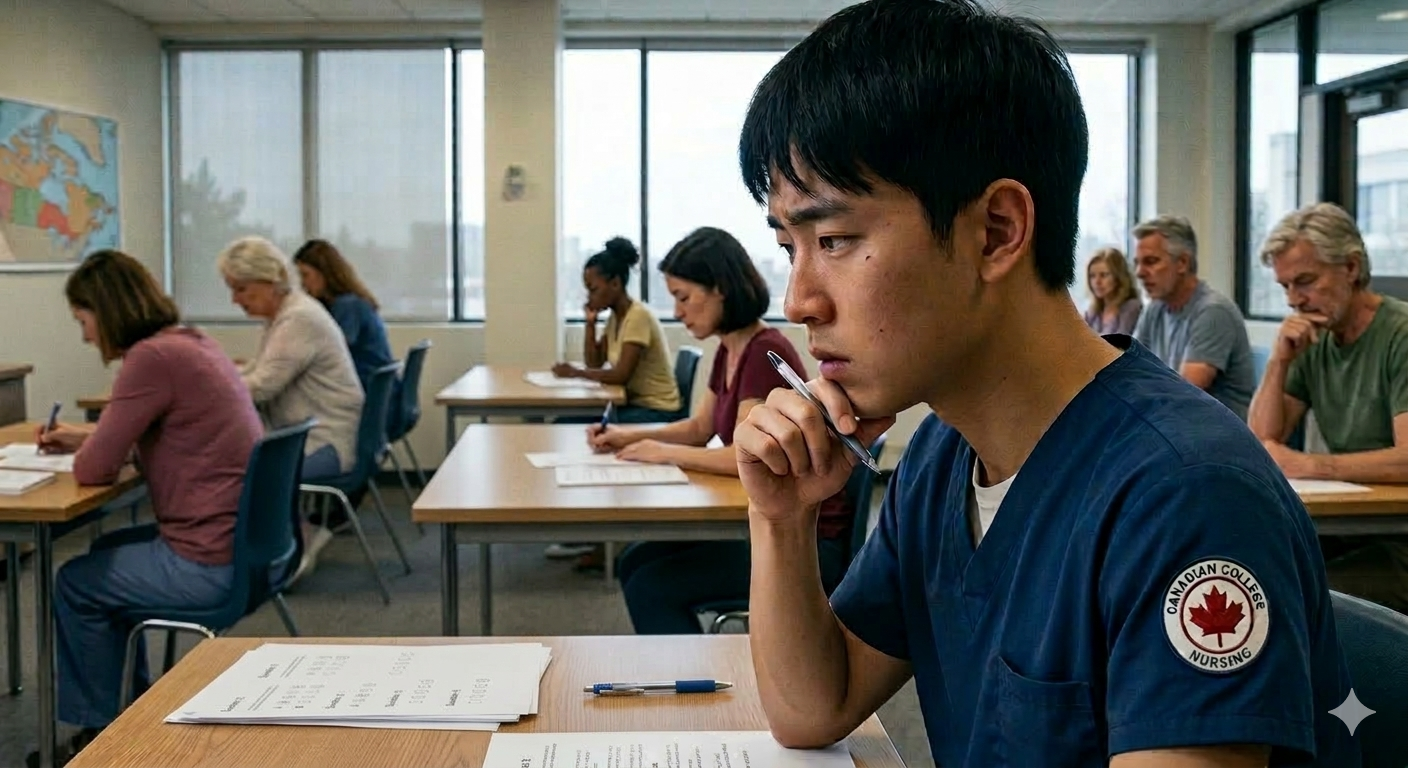
On the first day of class, we went around the room doing introductions.
I was not prepared for that. Some classmates were in their 30s, others in their 40s. A few had already completed full degrees in completely different fields before deciding to go into nursing. Others had worked entirely different careers before coming back to school.
In Korea, nursing programs are filled almost entirely with students who came straight from high school. Everyone is roughly the same age. Seeing people from such different life stages sitting in the same classroom, all starting the same program together, was something I genuinely hadn't expected.
Some Courses Were Easier Than Expected — And Then the Exams Happened
Certain courses, like math-related ones, were simpler than I anticipated. After the first few weeks, I actually remember thinking, okay, maybe this won't be so bad.
I would like to take that thought back.
Because then came the nursing theory exams. Multiple choice questions where all four options looked correct. The point wasn't to find the right answer — it was to find the most appropriate one based on nursing priority and clinical reasoning. The moment I realized I couldn't rely on logic alone, something in my brain quietly gave up.
It took real adjustment to learn how to think that way. But eventually, it clicked.
Skills Training Focused More on Thinking Than Doing
In Korea, nursing students practice procedures like injections repeatedly. You do it until it becomes automatic.
In my nursing program in Canada, injection practice was surprisingly limited. We barely touched it in the lab. Instead, the focus was heavily on patient assessment, communication, and clinical decision-making — recognizing when something is wrong, knowing who to tell, and understanding why the order of priorities matters.
Compared to what I expected, it felt almost backwards at first. But spending time in actual clinical placements, I started to understand why.
Looking Back
Nursing school in Canada wasn't necessarily harder or easier than what I expected — but it was genuinely different in ways I didn't anticipate.
If I had to summarize the difference, it might be this: in Korea, you learn how to do it. In Canada, you learn why you do it — and when you shouldn't.
For someone coming from Korea, that difference can feel disorienting at first. But it also ends up changing how you think about care altogether.
Contact
Questions or stories? Reach out anytime.
Social media
contact@nurseincanada.com
© 2025. All rights reserved.
Will update.